
Why Saying Yes Doesn’t Feel Like A Choice
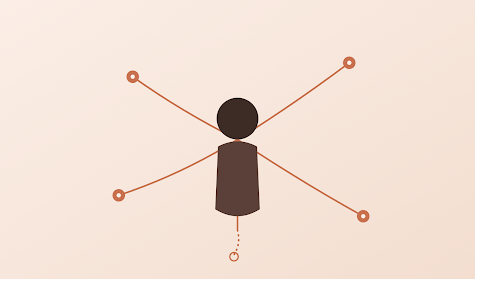
You said yes again. You didn’t even think about it. Someone asked for a favour, or your time, or your evening, and the yes was out of your mouth before you’d checked in with yourself at all.
Later, alone, the resentment shows up. Quiet, but real. You tell yourself you’re just being nice. But if this happens every single time — with different people, different requests, the same automatic yes — “nice” might not be the whole story.
What’s actually happening underneath
Here’s the thing most people get wrong: people-pleasing isn’t a personality trait. It’s not that you’re “just a giver” or “too soft.” For a lot of people, it’s something the nervous system learned to do to stay safe — a pattern trauma researchers call the fawn response.
Fight, flight, and freeze get all the attention. Fawn is the quiet fourth option. Instead of resisting a threat or running from it, the body learns to appease it. Agree. Accommodate. Disappear your own needs so fast that no one — including you — notices they were ever there.
The term comes from trauma therapist Pete Walker, who added fawning to the classic fight-flight-freeze model after seeing how often it showed up in people who’d survived chronic relational stress. Not one bad day. A whole childhood or relationship of them.
Why does this happen automatically?
Because it isn’t a decision. That’s the part that catches people off guard. A learned habit, you could talk yourself out of. A nervous-system response fires before the thinking part of your brain even gets a vote. This is why “just say no next time” almost never works. You’re not choosing to say yes. Some part of you decided, a long time ago, that saying no wasn’t safe.
That “long time ago” usually traces back further than the situation in front of you now. A childhood home where love came with conditions. A caregiver whose mood you had to manage before you managed your own. An environment where disagreement, even small disagreement, wasn’t met with conversation — it was met with withdrawal, or anger, or silence that lasted too long.
Here’s what makes this pattern so sticky: it worked. As a child, appeasing an unpredictable adult probably did keep things calmer. The nervous system learned a real lesson from a real situation. The trouble is it never got updated. It’s still running the old code in rooms that are actually safe now.
The signs you might recognize
You apologize before you’ve even finished the sentence. “Sorry, this is probably a dumb question, but—”
You agree with a plan you actively dislike, and only admit it to yourself hours later, alone.
You feel a flash of panic — real, physical panic — at the thought of someone being even slightly annoyed with you.
You’ve said “it’s fine, honestly, I don’t mind!” about something that was, in fact, not fine at all.
You rehearse conversations in your head for hours before having them, trying to find the version that upsets no one.
You feel exhausted after ordinary social plans, not because they were bad, but because you spent the whole time monitoring everyone else’s mood.
None of this is weakness. It’s a survival strategy that worked once. It kept a relationship intact, kept a household calmer, kept you safe when safety wasn’t guaranteed. The problem isn’t that it worked. The problem is that it never got the memo that the danger passed.
Is this just being a “people person”?
There’s a real difference, and it’s worth being honest with yourself about it. Genuine kindness is a choice made from a place of security — you help because you want to, and you’re just as okay if you’d said no. Fawning is compliance made from a place of fear — you help because some part of you believes something bad happens if you don’t.
One feels like generosity. The other feels like relief. If what you feel after saying yes is relief rather than warmth, that’s worth sitting with.
It doesn’t look the same everywhere
At work, fawning can look like the person who never pushes back in meetings, who takes on the extra project nobody else wanted, who says “happy to help!” while quietly drowning. It gets mistaken for being a team player. It gets rewarded, which makes it even harder to stop.
In friendships, it can look like being the one who always adjusts — the plan, the restaurant, the schedule — while everyone else assumes you genuinely don’t have preferences. You might not even know your own preferences anymore. That’s not an accident. Fawning trains you out of noticing them.
In romantic relationships, it can look like agreeing to things that don’t sit right, staying quiet during conflict, or feeling responsible for managing a partner’s mood the way you once managed a parent’s. The role feels achingly familiar, because in some sense, it is.
What actually helps
Notice the gap, don’t judge it. The goal isn’t to catch yourself fawning and immediately fix it. It’s just to notice: “That was fast. Did I actually want to say yes?” Awareness comes first. Change comes later, and slower than you’d like.
Practice the pause, even a tiny one. “Let me check and get back to you” is a full sentence. It buys your nervous system three seconds it never used to get. Three seconds is often enough to feel the difference between choosing and complying. It feels awkward at first. It’s supposed to. New patterns always do.
Rebuild tolerance for someone’s disappointment. This is the real work, and it’s uncomfortable on purpose. Someone being mildly annoyed with you is not the same thing as being unsafe. The two got fused together a long time ago. Unfusing them takes practice, not insight alone.
Get support if the pattern runs deep. If fawning shows up in most of your relationships — with a partner, a boss, a friend, even strangers — that’s not something to muscle through solo. A therapist trained in trauma-informed approaches can help the nervous system actually learn, at a felt level, that it’s allowed to want something different now.
Track it, don’t fight it. For a week, just notice every time you say yes and write down, in one word, how it actually felt — relief, warmth, dread, nothing. No changes required yet. Patterns you can see are patterns you can eventually work with. Patterns you can’t see just keep running quietly in the background, deciding things for you.
Your yes is allowed to mean yes. It’s also allowed to mean no. The version of you that learned to disappear to stay safe did the best it could with what it had. It doesn’t have to keep doing that job forever. It’s allowed to retire.